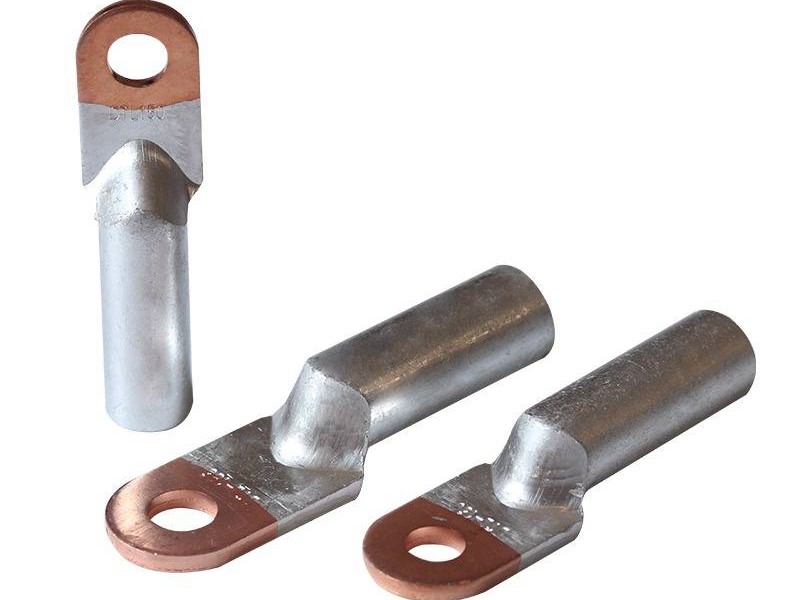
Product Overview: Copper Cable Lug
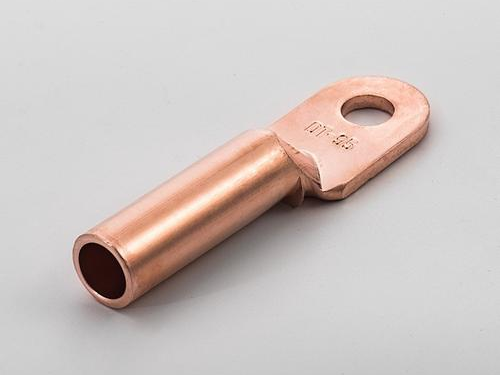
The Copper Cable Lug (DT & DTL Series Heavy-Duty Terminal Lugs) is an essential electrical fitting designed to terminate stranded copper or aluminum conductors onto equipment studs, busbars, and earth grounding bars. Manufactured by YiHao Power, our cable lugs are engineered from premium electrolytic copper tube and high-grade aluminum. Built in strict compliance with international manufacturing and safety standards for electrical power connectors, each Copper Cable Lug delivers superior mechanical crimp retention, ultra-low contact resistance, and long-term operating reliability in indoor and outdoor environments.
Technical Specifications
| Parameter | Specification |
|---|---|
| Product Series | DT Series (Pure Copper) / DTL Series (Copper-Aluminum Bimetallic) |
| Conductor Material | 99.9% Pure Electrolytic Copper (T2) / EC Grade Aluminum (L3) |
| Surface Protection | Natural Bright Copper / Electro-Tin Plated (Custom Options) |
| Cable Size Range | 16 mm² to 630 mm² (Custom Stud Hole Sizes Available) |
| Standard Compliance | UL / IEC / BS / ISO International Standards Compliant |
| Application Scope | Power Substations, Distribution Cabinets, Transformer Connections, Earth Grids |
Key Performance Features of Our Copper Cable Lug
- Friction-Welded Bimetallic Transition: DTL Series lugs utilize advanced friction welding to bond copper palms to aluminum barrels seamlessly. This eliminates galvanic action and electrolytic oxidation when terminating aluminum conductors onto copper busbars.
- Seamless Heavy-Duty Barrel Construction: The seamless barrel prevents splitting during hydraulic crimping, securing stranded cables against high vibrational stresses and mechanical pull-out forces.
- Low Resistance & Thermal Stability: Premium conductive raw materials prevent temperature spikes under continuous full-load operating currents and transient short-circuit conditions.
- Versatile Earthing & Power Compatibility: Suitable for connecting grounding leads to copper earth bars, steel tower legs, power transformers, and switchgear cabinets.
Installation Guidelines for Hydraulic Crimping & Bolting
To ensure optimal electrical continuity and mechanical joint integrity with your Copper Cable Lug, follow these standard field practices:
- Cable Stripping: Strip the cable insulation clean to a length equal to the lug barrel depth plus 2mm, taking care not to nick individual wire strands.
- Crimping Procedure: Insert the conductor fully into the lug barrel. Select the corresponding crimping die and perform hex or indent compression starting from the palm end working toward the cable entrance.
- Bolted Terminal Contact: Clean the contact surface of the busbar or terminal stud. Apply conductive grease if required and torque the bolt to specification using standard washers.
Primary Application Scenarios Across Electrical Facilities
Our premium terminal lugs and cable connectors are widely deployed across global infrastructure projects, including:
- Main power distribution panels, switchgear busbars, and circuit breaker connections.
- High-voltage power transformer bushings and distribution cabinet terminals.
- Main equipotential grounding bars and earth grid lead terminations.
- Solar PV inverter cabling, wind turbine generators, and battery energy storage systems (BESS).
Frequently Asked Questions (FAQ)
Q1: When should I choose a DTL bimetallic cable lug instead of a DT pure copper cable lug?
A1: Use DTL bimetallic lugs when terminating aluminum cables onto copper busbars to prevent galvanic corrosion. Use DT pure copper lugs for copper conductor to copper busbar terminations.
Q2: Can these cable lugs be tin-plated for corrosive environments?
A2: Yes, electro-tin plating is available upon request to enhance surface oxidation resistance in humid, marine, or industrial chemical environments.
Quality Assurance & Factory Testing
Every batch of Copper Cable Lug products manufactured by YiHao Power undergoes strict quality inspection before dispatch. Our testing protocols include dimensional tolerance checks, crimp pull-out force testing, micro-ohm electrical resistance testing, and friction-weld joint integrity checks.