In high-voltage electrical grid construction and substation engineering, fast-track procurement can sometimes obscure a critical priority: compliance with international quality standards. When procuring utility power fasteners—such as structural tower bolts, anchor rods, strain clamps, and U-bolts—are small in size, but they sustain massive mechanical loads and constant environmental exposure. A single fastener failure can precipitate catastrophic structural collapses or severe power outages.
For EPC contractors and utility procurement managers, evaluating suppliers based on international engineering standards is the primary defense against operational risk. Below is an essential guide to the key standards governing electrical fasteners and line accessories.
1. ISO Standards: Mechanical Performance & Surface Coatings
The International Organization for Standardization (ISO) provides globally accepted benchmarks for fastener mechanics and corrosion protection:
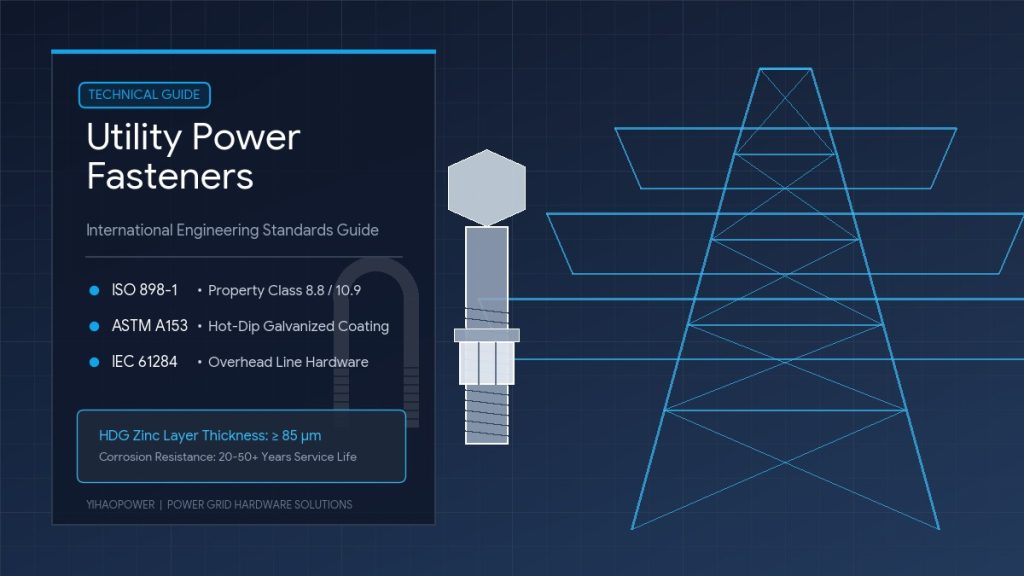
- ISO 898-1: Specifies the mechanical and physical properties of carbon steel and alloy steel fasteners. In power transmission towers, Property Classes 8.8 and 10.9 are standard due to their high tensile strength and yield stress capacity.
- ISO 1461: Defines the specification for hot-dip galvanized coatings on fabricated iron and steel articles. It outlines minimum coating thickness requirements (typically 70 µm to 85+ µm) to guarantee multi-decade corrosion resistance in outdoor environments.
2. ASTM Standards: Materials & Structural Application
American Society for Testing and Materials (ASTM) standards are widely specified across North America, Latin America, and Middle Eastern utility projects:
- ASTM A153 / A153M: Covers the zinc coating (hot-dip) requirements applied to iron and steel hardware. It ensures uniform zinc adhesion and prevents thread binding after galvanizing.
- ASTM F3125 (Replacing ASTM A325/A490): Governs high-strength structural bolts used in power line towers, substations, and heavy steel structures requiring exceptional fatigue resistance.
3. IEC Standards: Electrical & Line Fitting Requirements
The International Electrotechnical Commission (IEC) focuses specifically on hardware used within live power networks:
- IEC 61284: Specifies general requirements and tests for overhead line hardware, including mechanical breaking load tests, slip tests for clamps, and thermal cycle testing.
Why Compliance Is Non-Negotiable for Utility Power Fasteners
Working with compliant power hardware suppliers simplifies quality audits, ensures seamless interchangeability on-site, and mitigates legal liabilities for utility developers.
At YiHaoPower, every batch of electrical fasteners and overhead line accessories is manufactured to strict ISO, ASTM, and IEC benchmarks. We provide comprehensive Mill Test Reports (MTC) and third-party inspection certifications with every shipment to ensure zero-defect delivery for your utility projects.
Need Customized Hardware or Technical Datasheets?
Contact our team directly for instant quotations, CAD drawings, and samples.